Problem
The Dog Institute ran its customers, packages, bookings and card payments on Pike13 and its bundled card processor. The processor kept getting more expensive. Its statements show the effective rate rising from 7.19% of card sales in August 2025 to 16.08% in October 2026.
Leaving Pike13 was not a simple export. Customers had prepaid packages and visit balances, and the business had nine years of history in the system. All of it had to carry over intact.
What I Built
I worked with the founder and the five-person team to map how they look up customers, sell packages, take bookings and run each class day. Then I built three connected parts on PostgreSQL and Netlify Functions, with analog backups alongside the digital flows.
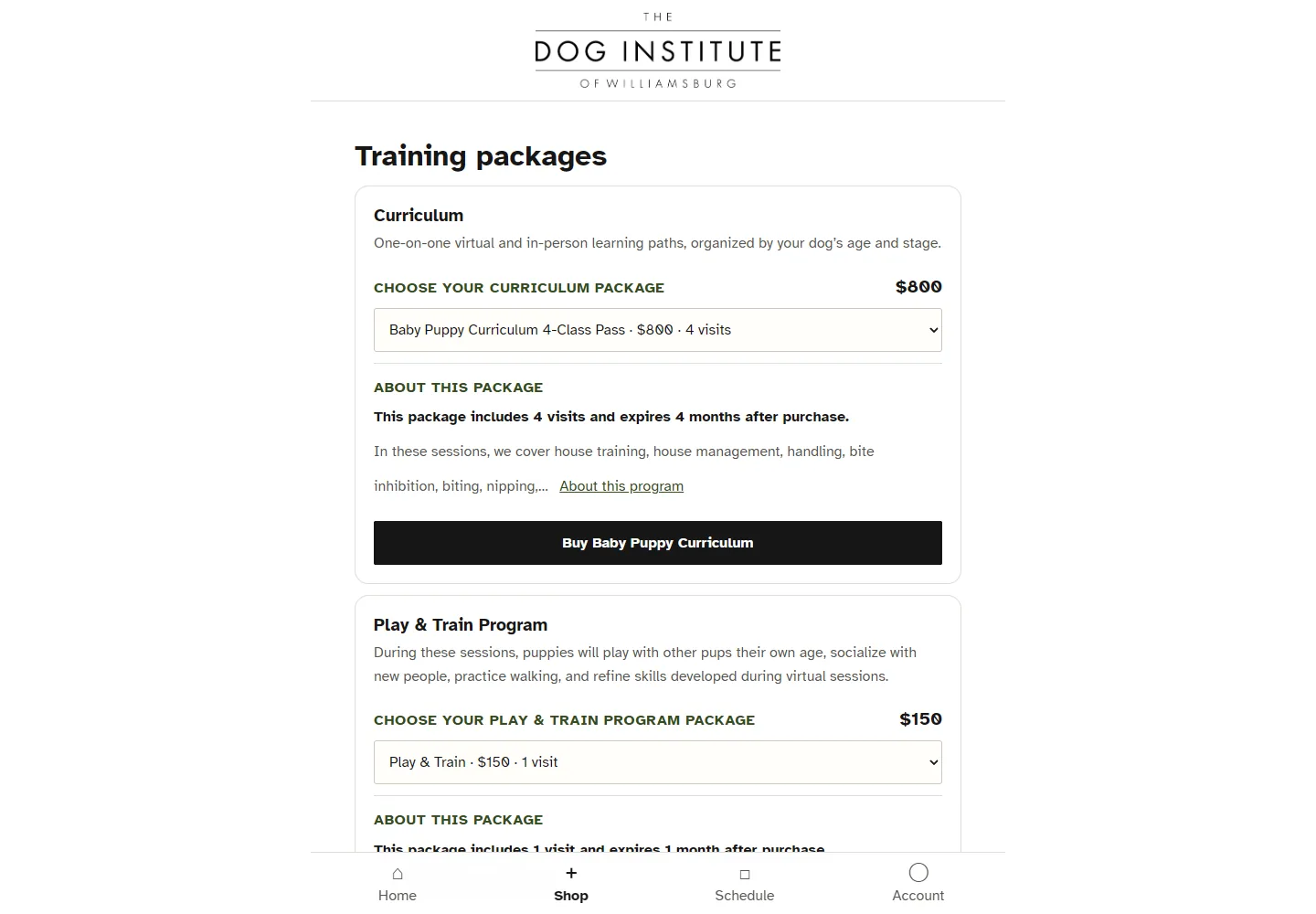
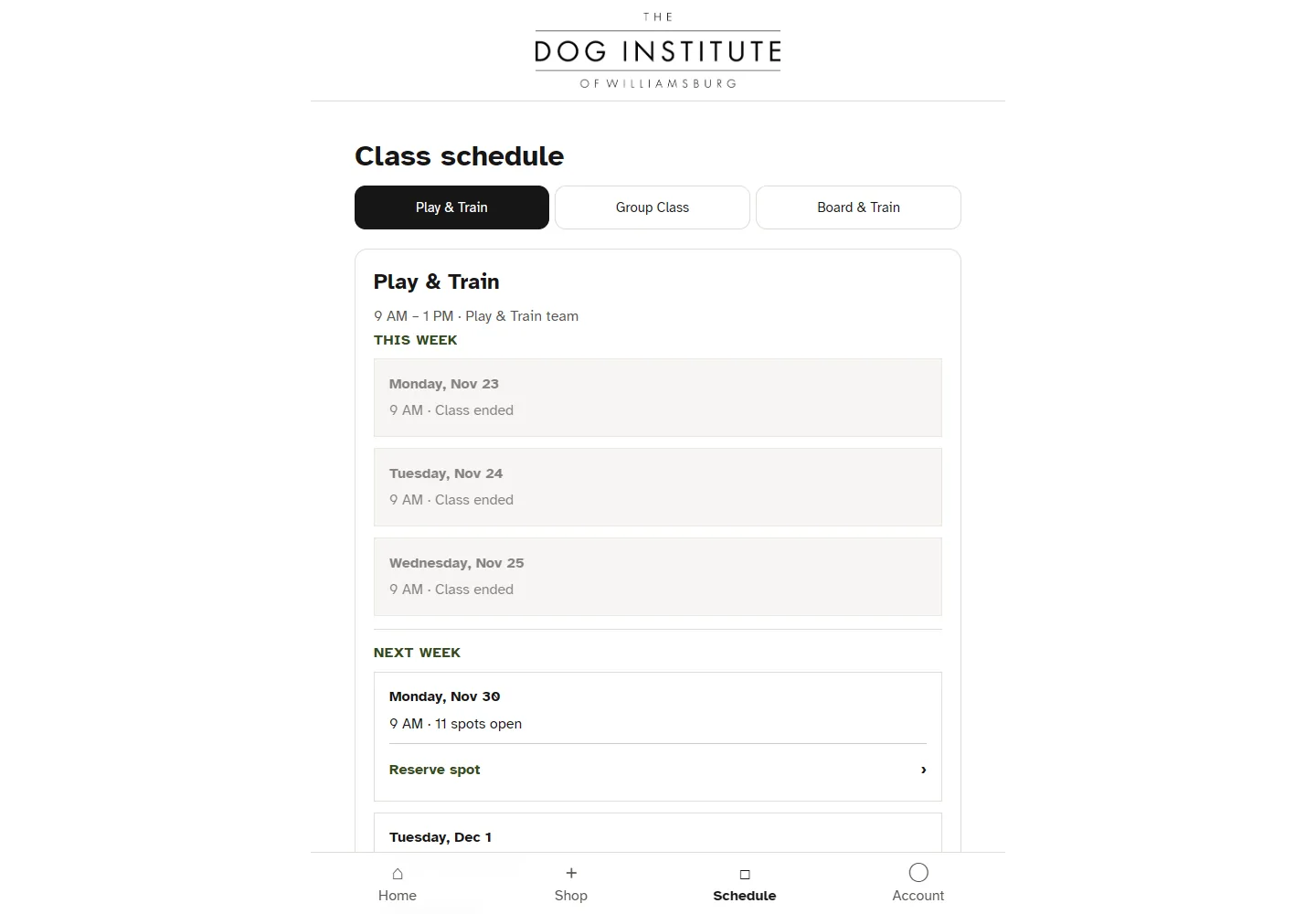
Customers use the public site to buy packages, book classes, keep their dogs' records and see their visit history. Staff use a portal built around their day at the front desk and in class. Behind both, a set of emails and scheduled jobs keeps customers, staff, Square and the ledger in step without anyone running a report.
Staff Portal
Pike13 was where the front desk worked all day, so its replacement had to cover the same jobs. The portal has six screens (Classes, Review, New dogs, New transactions, Visits remaining and Unpaid visits) and a full record for every client.
Class Day and Check-In
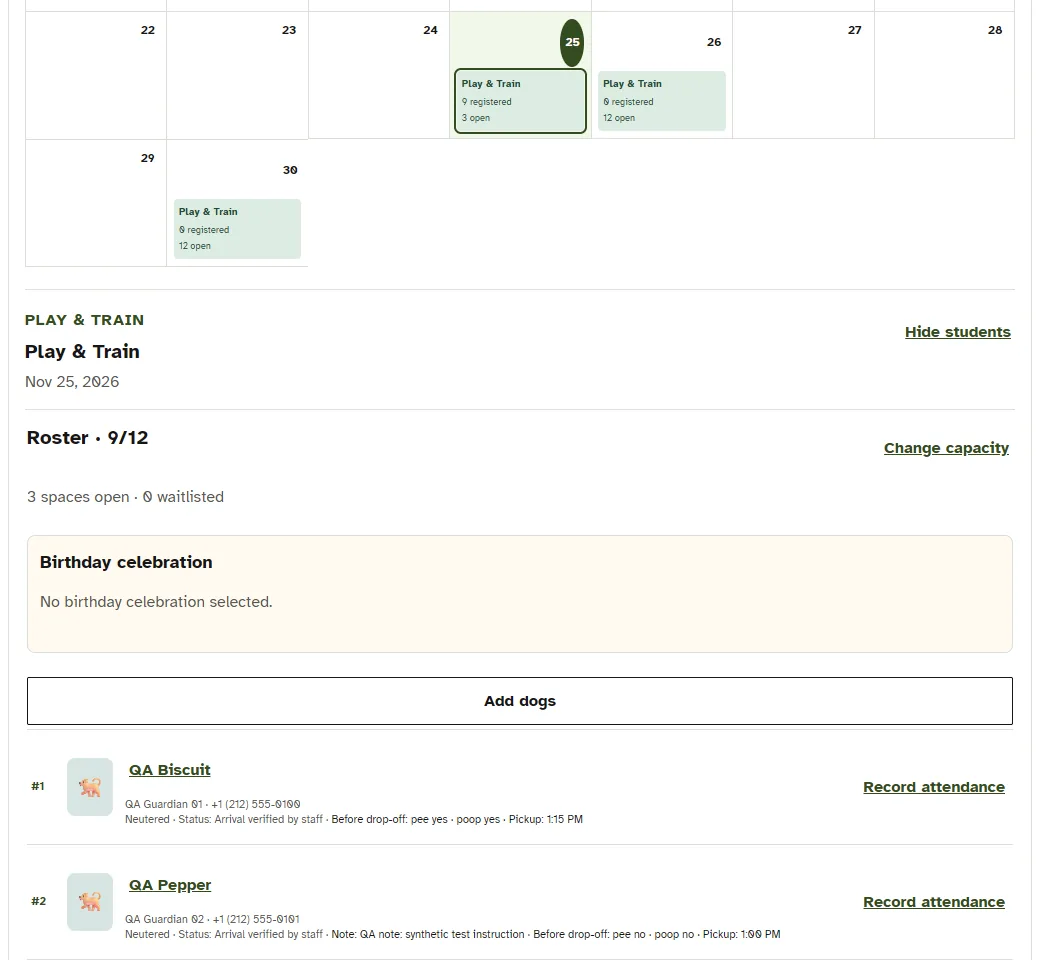
A month calendar shows each Play & Train and Group Class session with spots taken and open. Each roster numbers the dogs for their leashes and shows the guardian's phone, spay or neuter status, and the customer's own drop-off notes and pickup time. Staff confirm arrivals, add walk-in dogs and change capacity. A separate calendar tracks multi-day Board & Train stays.
Attendance That Updates the Balance
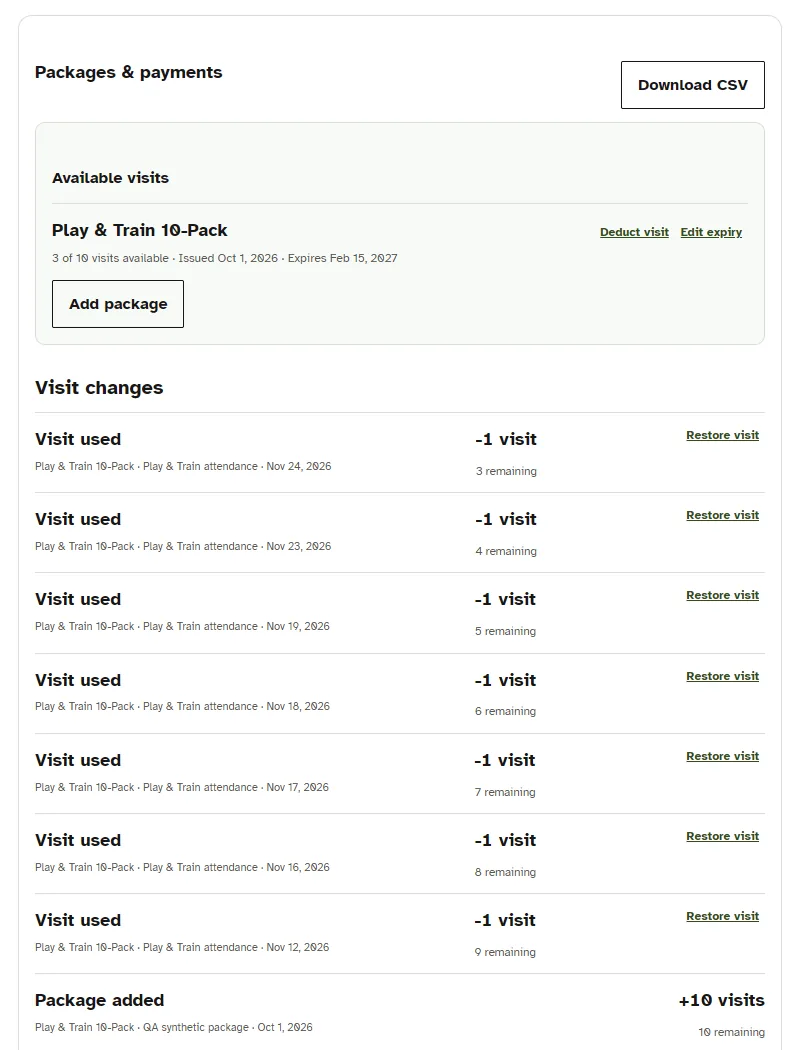
Recording attendance takes the visit off the right package in the same step, and a repeat click cannot take a second visit. A dog that attends with no visits left gets a visit owed, not a negative balance. The Unpaid visits screen lists these, and staff can settle one or email a reminder after previewing the exact message.
One Record per Client
Each record holds email addresses and sign-in status, phones, dogs with vaccination and spay or neuter records, a class-history calendar, and every package with each visit used. Staff add or gift a package, deduct or restore a visit with a reason, change an expiry, merge a duplicate sign-up, and download the history as a CSV.
Balances at a Glance
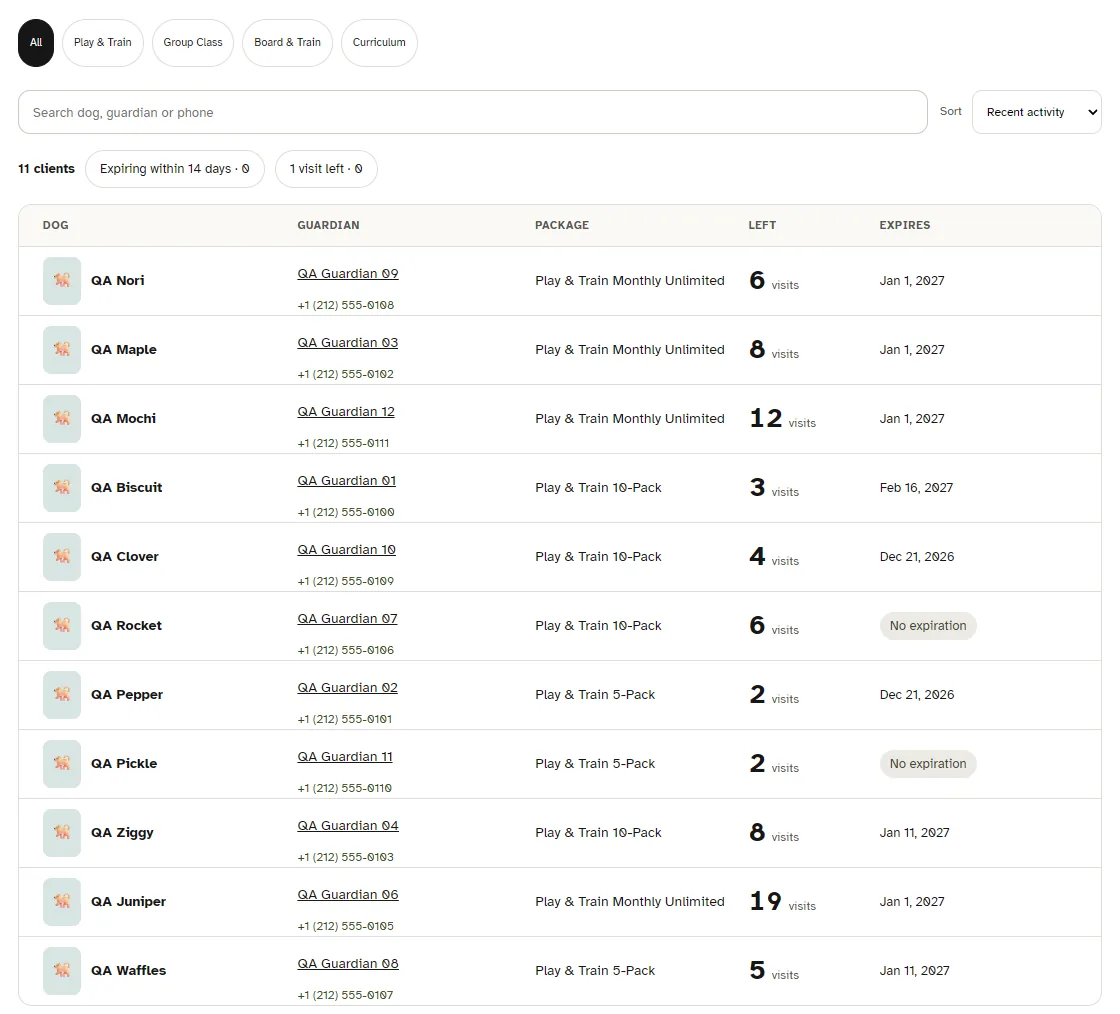
Visits remaining lists every active package with visits left and expiry, filtered by service, with quick views for packages expiring within 14 days and those down to one visit.
A Queue for Decisions
The Review screen holds the calls only a person should make: account access claims, linking a Square customer to a client, vaccination certificates, Board & Train requests, and attendance that still needs a visit. A task appears there only when the portal offers a clear next step.
Front-Desk Sales
Front-desk sales run on Square. A sale adds the package to a client's account only when the payment is complete, the Square customer is linked to one reviewed client, and every item maps to a known package. Anything else waits in New transactions, where staff can choose the client who paid.
Email and Daily Jobs
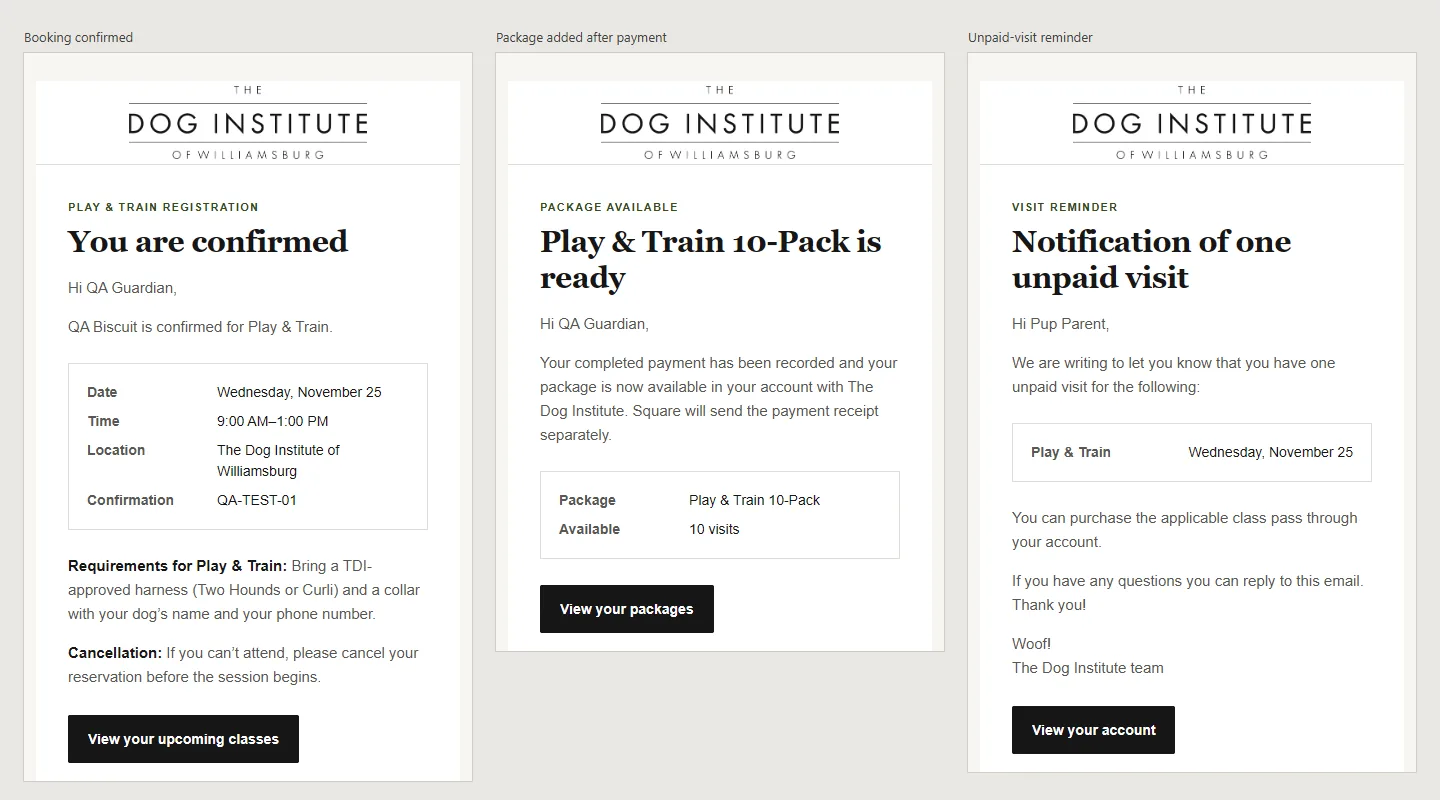
The platform sends its own customer emails, in the institute's branding, in place of the ones Pike13 used to send. The code holds 23 templates. Each notice waits until the booking, payment or grant it describes is saved, then joins a queue, so a failed send can retry without the customer getting it twice.
Seven kinds are live. They cover booking and waitlist confirmations, a waitlist spot opening up, Play & Train cancellations, a package ready after payment, a gifted package, and a welcome email. Notices for Group Class, Board & Train, low balances and expiring packages are built on the same queue. Customers choose which of six kinds of notice they get, and staff see those choices on the client record. A Group Class cancellation always goes out.
Staff get email too. The front-desk inbox hears about each new dog profile and each new package, with a link to the client record. Scheduled jobs check Square for new payments twice a day, re-check refunds and disputes daily, refresh unlinked Square customers daily, and look for packages about to expire. Every hour, any email still waiting gets another try. A daily digest emails me any system alerts.
Payments and Fees
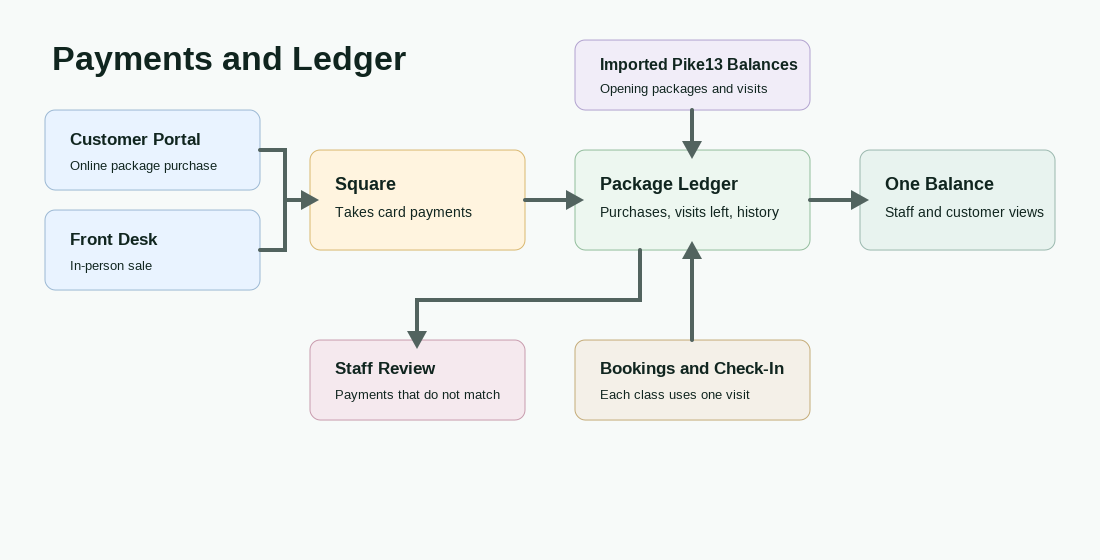
Square is the payment authority. Customers buy packages online through Square checkout, and staff sell at the front desk on Square. The platform keeps the package-and-visit ledger. It ties each Square payment, refund and order to the customer's purchases, remaining visits, deductions and history, so staff get an auditable view of every balance.
In September 2026 card processing cost 14.6% of sales on the old processor. It runs about 3% on Square. At that month's volume, that is about $6,900 a month less. Square's measured rate on the institute's card payments from January to November 2026 was 2.98%.
Before trusting those figures, I checked the history they rest on. 99 months of processor statements, from August 2018 to October 2026, match Pike13's sales records to within 0.07%.
Migration
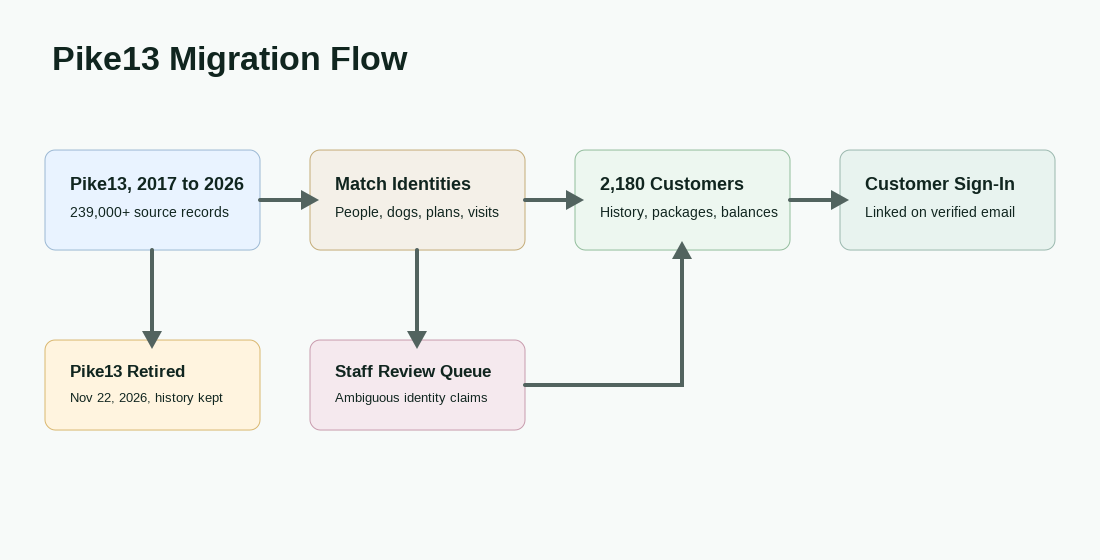
Pike13 held nine years of history, from 2017 to 2026. The migration consolidated more than 239,000 source records into 2,180 customer records and carried over their history, packages, balances and visit deductions. When the records could not say for certain who a claim belonged to, the platform sent it to a staff review queue instead of guessing.
Pike13 was retired on November 22, 2026. Its imported history stays in the platform as a read-only record.
Design Decisions
Square Takes the Card
Every card payment, online or in person, goes through Square. Card data stays with Square and never enters the platform.
One Ledger for Every Channel
Online purchases, front-desk sales, bookings and staff check-ins all write to the same ledger, so staff and the customer always see the same balance.
Linking Only on a Clear Match
A returning customer's sign-in links to their Pike13 history only when exactly one record matches their verified email. Anything less certain goes to staff, who record who decided and why. Account recovery requires proof that the customer owns the email address.
Reviewed Releases Only
Each database migration is approved by checksum before it applies, so only the reviewed version runs. There were 98 by November 24, 2026. That day the unit suite had 695 tests and none failed.
Current Work
The migration is done. Now I maintain the platform, add features, and make the flows that mix in-person and digital steps more efficient.
I am also building a training mobile app for the institute, which is in progress. It walks a new puppy's owner through the institute's house-training routine one step at a time, from potty checks to crate and tether time, and logs each potty trip and training set.